
Exterior basement waterproofing means digging along the foundation to the footing, sealing the outside of the wall, adding a membrane and drain tile, and backfilling. It works, and it is also the most disruptive option. Most damp basements improve with cheaper steps first, such as moving roof and sprinkler water away from the wall, fixing the grade and adding a sump pump. Below we compare each method and sort groundwater from leaks.
We are plumbers, not foundation contractors. We install sump pumps, discharge piping and drain connections, and we find leaks in your water lines. We do not dig out and seal foundation walls or repair structural cracks.
Before anyone digs: the cheap fixes that remove most of the water
Water near a foundation usually comes from the surface, not from deep below. If a gutter spills at the corner or the soil slopes toward the house, the wall gets soaked every time it rains. Fix those and many basements stop leaking without any excavation.
Check these outside first
- Downspouts that end at the foundation instead of several feet away on a splash block or extension
- Soil that slopes toward the house or has settled into a dip along the wall
- Sprinkler heads that spray the foundation wall or soak the bed beside it
- Window wells without covers or with clogged drains at the bottom
- Gutters that overflow because leaves or ice block the downspout
Exterior, interior and surface fixes compared
| Method | What it does | Best fit | Trade-off |
|---|---|---|---|
| Regrade and extend downspouts | Moves surface water away from the wall | Damp after rain or irrigation, soil slopes toward the house | Cheapest, but only helps surface water |
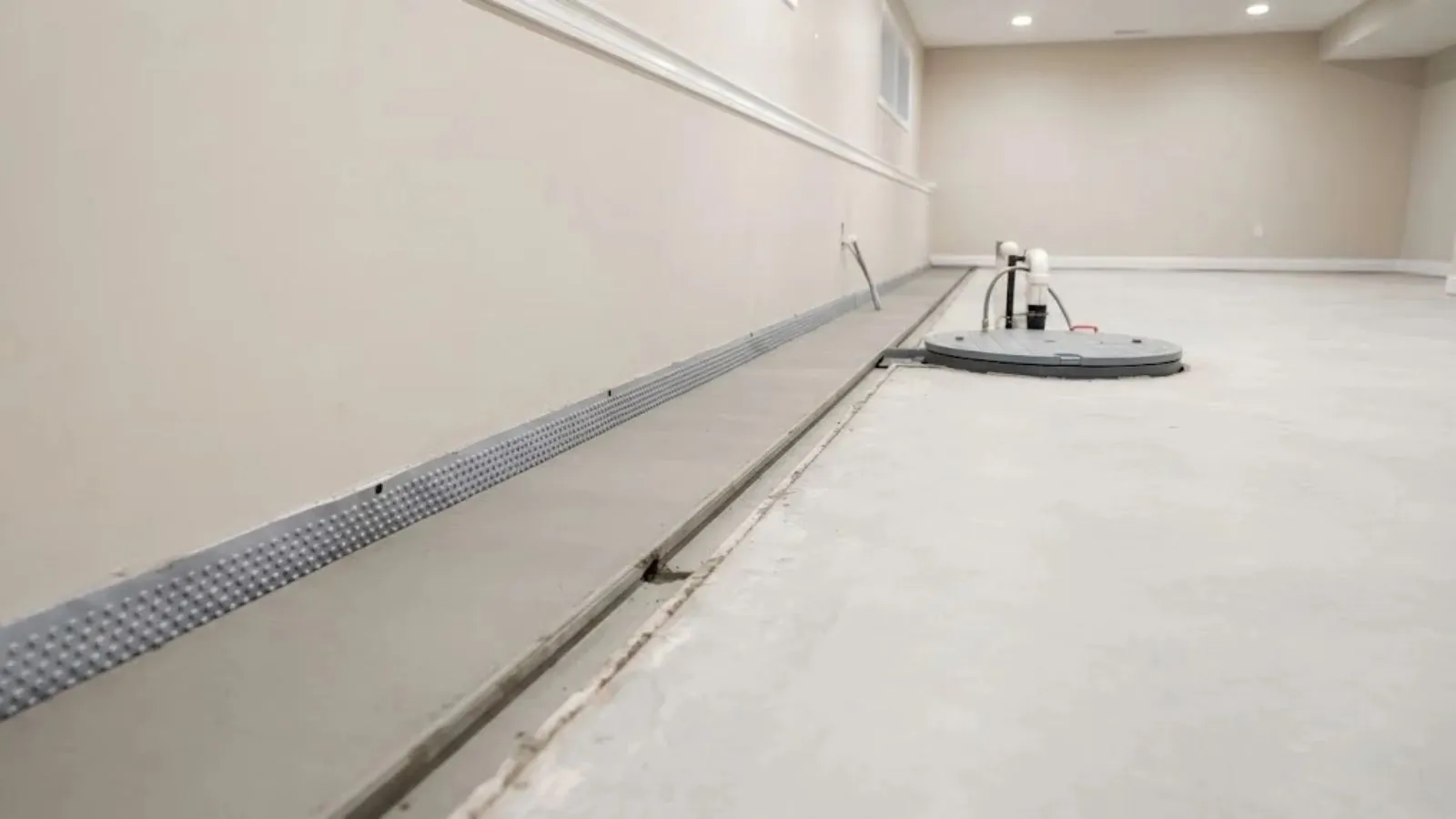
| Interior drain channel and sump pump | Collects water at the footing inside and pumps it out | Seepage at the floor edge, groundwater pressure | Manages water after it enters, power needed |
| Exterior excavation with membrane and drain tile | Seals the outside of the wall and drains the footing | Persistent wall leaks, a wall that stays wet, major repair already planned | Most disruptive, landscaping and utilities in the way |
| Crack repair | Seals an individual crack | A single stable crack with seepage | Structural cracks need an engineer or foundation contractor |
Cost depends on access, depth and length of wall. Get written scopes from more than one contractor for exterior work.
How to tell groundwater from a plumbing leak
Plumbing leaks are far more common than people expect, and they are fixed with a pipe wrench, not a shovel. A short test sorts the two.
- Check the timingWater that appears after rain, snowmelt or a sprinkler run points to the outside. Water that shows up on a dry week points to a pipe.
- Read the meterTurn off every fixture and appliance, then check the water meter. If the dial or low-flow indicator keeps moving, you have a leak in a supply line.
- Look at the locationWet only along one wall or at the floor edge suggests groundwater. A wet spot under a bathroom, water heater or laundry points to plumbing.
- Feel for the sourceDamp that is warm or on a hot water line suggests a supply leak. Water that smells of sewage suggests a drain or sewer problem.
- Call for a pressure testIf the meter moves or the cause is unclear, leak detection with acoustic listening or a pressure test finds a pipe leak without cutting the wall.
Need a plumber right now?
The 24/7 line is open. A dispatcher will book a licensed plumber.
What drain tile does and why it needs a place to go
Drain tile is a perforated pipe laid beside the footing in gravel. It collects groundwater and carries it away before pressure builds against the wall. In an exterior job it is installed along with the membrane, and in an interior job a version of it runs just inside the footing.
Either way, the water must discharge somewhere. If the lot has a slope for it to run out in daylight, that can work. If not, the water collects in a sump pit and a sump pump sends it out through discharge piping away from the house.
When exterior excavation is justified
A short test for the dig
Digging along the foundation is justified when surface water has been ruled out, the wall itself is the point of entry, and the problem returns after cheaper fixes. It also makes sense when the wall will be exposed for another repair anyway.
It is a poor first move when the water is coming from a gutter, a sprinkler or a leaking pipe, because the trench will not stop any of those.
Where plumbers fit and where they stop
A plumber is the right call for the pump, the pit, the discharge line and any drain that ties into the sewer. We also check that the interior floor drain works and that a pump has a proper check valve and power. Our basement waterproofing page covers what we do inside the house.
We do not excavate foundations, apply membranes or repair structural cracks. For that, hire a foundation or waterproofing contractor and ask them to put the scope in writing. Whoever digs must call 811 first, and we cover that in the local note below.
If water is in the basement now
Turn off power to anything standing in water, stay out of the area and shut the main water valve if a pipe is the cause. If a sump pump has stopped, call the 24/7 line and describe what you see. We serve homes in Lehi and Eagle Mountain as well as Saratoga Springs.
Saratoga Springs: irrigation water and digging near the foundation
The city's pressurized irrigation system is charged the week of April 15 and drained the week of October 15. Sprinkler heads that spray a foundation wall during that window add water to the soil beside it, so if your damp spot appears only between those dates, adjust the heads before you pay for excavation.
That irrigation water is non-potable, which matters if a head leaks into a window well, because you should not drink or play in it. Direct overspray away from the house and window wells.
Blue Stakes of Utah asks you to call 811 at least three business days before digging. Utilities do not mark lines they do not own, so ask your excavator how they will locate lines on your own property before anyone starts a trench.
Source: city utility page and Blue Stakes excavator guide
Frequently asked questions
It needs a trench along the full wall, often down to the footing, plus membrane, drain tile, gravel, backfill and landscaping repair. Utilities, decks, patios and trees in the way add work. Interior systems skip the excavation but only manage water after it gets in.
A pump removes water that collects in a pit. It does not stop water from reaching the wall. If the source is a gutter or sprinkler, fix that first. If water enters at the floor edge, an interior drain channel feeding a pump is a common pairing.
Not always. Drain tile needs a discharge point, either a sloped outlet that runs to daylight or a sump pit with a pump. The right choice depends on the grade of your lot.
No. Many damp basements come from surface water, condensation or a plumbing leak. Test the timing and the water meter before assuming the foundation is at fault.
Yes, they can add water to the soil against the wall. The city's pressurized irrigation is charged the week of April 15 and drained the week of October 15, so dampness that tracks that window points to heads or zones near the house.
Still unsure? Call (385) 488-1892
Sources and references
Local facts on this page come from public pages like these. The city lists the 2021 International Plumbing Code (IPC) as adopted, and permit rules vary by job, so ask the Saratoga Springs building department before work starts. Page last reviewed 2026-10-15.