
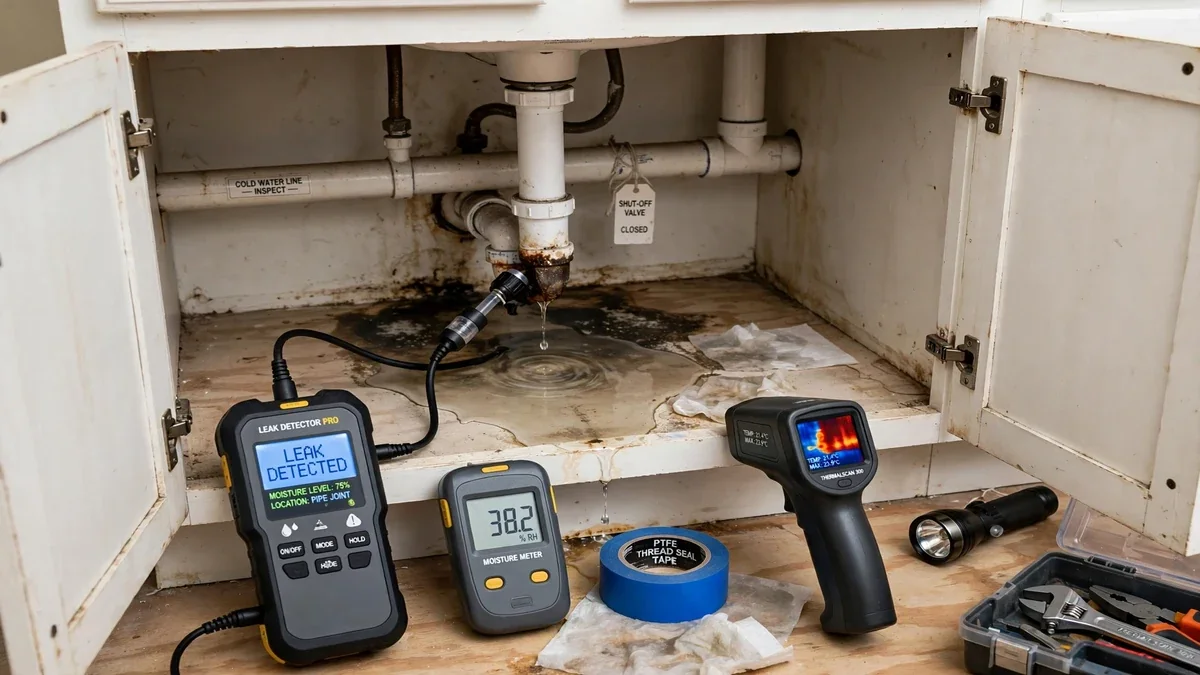
Leak detection in Saratoga Springs, UT is the work of finding exactly where water is escaping from a pipe you cannot see, using a meter test, pressure test, acoustic listening, thermal imaging and pipe locating before anyone cuts into a wall or floor. Our 24/7 emergency line is open if water is actively spreading, a ceiling is dripping or a floor feels warm for no reason.
While you wait for the plumber, shut off the main water valve if you can reach it, and keep people away from wet outlets, light fixtures and power strips. Turn off the breaker for a flooded room only if you can reach the panel without standing in water. Same-day appointments are available when the schedule allows, and nights and weekends get the same answer as weekday calls.
The meter is still moving when everything is off
This is the most common way a hidden leak shows up. The water bill climbs, nobody is using more water, and the meter keeps turning even when the house is quiet. A moving meter with every fixture off means water is leaving the system somewhere between the meter and a tap.
You can run the test yourself in about half an hour. Make sure the dishwasher, washer, ice maker and irrigation controller are idle, and that no one flushes a toilet.
- Find the meterIt sits in a lidded box near the property line or curb. Lift the lid carefully and wipe off the face of the meter.
- Look for the leak indicatorMost meters have a small dial or triangle that spins when any water moves. If it turns with the house idle, water is flowing.
- Write down the readingNote the number, wait 30 minutes to an hour without using water, and read it again. A change means a leak.
- Close the house valve and repeatShut the main valve where the line enters the home. If the meter stops, the leak is inside. If it keeps turning, the leak is on the buried line.
Saratoga Springs also gives residents a tool for this. The city's My Water Use portal shows hourly and historical use for both culinary and irrigation water. If your hourly use never drops to zero overnight, that is a strong sign of a steady leak, and the history shows roughly when it began. Bring that graph to the plumber, since it saves time on the first visit.
How we find a leak without opening the whole wall
We start with the least invasive method and move on only if it does not answer the question. Most calls use two or three of these tools together, since each one confirms what the others suggest.
| Method | What it tells us | Where it works best |
|---|---|---|
| Meter test | Whether water is leaving the system at all | First step on any high bill or moving meter |
| Pressure test | Whether a line holds pressure once isolated | Separating the hot side, cold side and the buried line |
| Acoustic listening | The hiss or tick of water escaping a pipe | Slabs, driveways and long buried runs |
| Thermal imaging | Warm or cool patterns from moisture in a surface | Walls, ceilings and floors with hot water lines |
| Moisture meter | How wet drywall, wood or concrete is | Confirming a stain and mapping its edges |
| Tracer gas | Gas escapes upward from the leaking pipe and is sniffed at the surface | Stubborn leaks where listening is unclear |
| Pipe locator | The path and depth of a buried line | Planning where to open the ground |
| Inspection camera | A direct look inside a drain or through a small access hole | Drain leaks and hollow wall cavities |
No single tool is perfect. Results are strongest when two methods agree.
Slab leaks: warm spots, water sounds and a high bill
A slab leak is a leak in a water line that runs in or under the concrete floor. Hot water lines are the usual suspects, because the pipe is warm, the leak is often constant and a spot on the floor can heat up. Other signs are the sound of running water when nothing is on, a damp patch under carpet or a sudden rise in the bill.
We confirm it before recommending any repair. A pressure test isolates the hot and cold lines, then listening gear and a thermal camera narrow the search to a few feet of floor. If the leak is on a line under the slab, there are usually three honest choices:
Slab leak repair options
- Spot repair: open the floor over the leak and fix that section of pipe
- Reroute: abandon the leaking line and run a new one through the attic or walls
- Repipe: replace the failing lines if the pipe is leaking in several places
Spot repair costs the least and fits a single failure. Rerouting avoids cutting concrete and suits a line that is hard to reach. If leaks keep returning, our repiping page explains when replacing the whole system makes more sense. We do not repair foundations, and if a leak has moved soil or cracked the slab, you may also need a structural opinion.
Stains on the ceiling or wall: tracing water back to its source
A brown ring on a ceiling or a bubble in the paint is only where the water shows up, not where it starts. Water follows framing and pipes before it drips, so the stain can sit several feet from the leak. We use a moisture meter to map the wet area and thermal imaging to follow the trail toward a supply line, drain, shower pan or fixture above.
Common sources are a pinhole in a supply pipe, a loose drain fitting behind a tub or a failed shower valve. If the stain appears after someone showers upstairs, tell us. That clue often points to the shower drain or valve, not a pressurized line.
Under the house: crawlspace leaks
Not every Saratoga Springs home has a crawlspace. Many are built on a slab or over a full basement. Where a crawlspace exists, it is the easiest place to inspect a pipe, since we can look at the lines directly. Signs include damp insulation, a musty smell from the floor registers, sagging floor insulation and mineral stains on pipe joints.
If your home has a basement or slab instead, the same symptoms may come from a basement wall or a pipe in the floor system. In that case, basement waterproofing may be part of the conversation once the pipes are ruled out.
Need a plumber right now?
The 24/7 line is open. A dispatcher will book a licensed plumber.
Buried water lines between the meter and the house
The line from the meter to the home is underground, so a leak there announces itself differently. Look for a wet lawn strip with no sprinkler on it, a soft patch in a driveway or sidewalk, or a meter that runs after you close the house valve. Ground that stays soft in a dry week deserves a look.
We listen along the line, trace it with a pipe locator and confirm the leak point before digging. For repair and replacement of the line itself, see our water line repair and replacement page. Remember that the pipe from the meter to the house may belong to the homeowner, so a leak there is usually your bill and your repair.
Sprinkler and irrigation leaks in the pressurized irrigation season
Saratoga Springs runs a separate pressurized irrigation system for outdoor watering. The city charges it beginning the week of April 15 and drains it the week of October 15, and it stays inactive until spring. That schedule helps with diagnosis. A wet spot in a lawn during summer might be an irrigation break, while a wet spot in winter is likely a culinary water line, since the irrigation side is empty.
Irrigation water is non-potable, and culinary and irrigation lines must never be connected to each other. If a repair would link them, we will not do it. We find sprinkler line leaks by isolating zones with the controller, then listening and tracing the pipe. Call us for leaks in the culinary side of your yard plumbing, and an irrigation contractor for valves and heads.
Pool, spa, yard and meter box leaks
Pool and spa leaks are usually separate from the house plumbing. Evaporation can mimic a leak, so a bucket test comes first. If the water level drops faster than the bucket's, we can check the equipment pad lines and the supply to the pool for leaks, while the shell itself is a pool contractor's job.
A meter box that fills with water can mean a leak at the meter connection or on your side of the line. Check whether water is clear and moving. Tell us what you see, and avoid tightening or turning the meter itself, since a mistake there can make the leak worse.
What leak detection can and cannot tell you
We are honest about the limits. Pinpointing is accurate to a small area, not to the inch, and pipe material, depth, background noise and a concrete thickness all change the result. A leak under a tiled floor with other pipes nearby can take two methods to confirm.
Sometimes the answer is a range of possibilities. In those cases we tell you what the evidence supports and what it does not, then explain whether to open one spot or dig a trench. We would rather give you a small search area than cut the wrong place.
Before you call, check
- Shut off the main valve and see whether the meter stops
- Write down the meter reading and the time
- List where you see water, stains or hear sounds
- Check the water heater area for dampness
- Photograph damage before cleanup
- Read your policy and keep receipts for any dry-out work
What affects the price of finding a leak
How hard the leak is to reach
A visible drip under a sink is a quick look. A line under a finished slab needs more tools and time.
The number of methods needed
A meter test is quick. Adding listening, thermal imaging and tracer gas increases the time on site.
Pipe material and depth
Copper, PEX and plastic transmit sound differently, and deeper lines are harder to pinpoint.
Access and repair work
Opening drywall, concrete or a yard is separate from finding the leak and is quoted separately.
Time of day
Night, weekend and holiday dispatch is available. Ask for the clear price before work starts.
A note on insurance
Homeowners policies often cover sudden water damage, but many exclude the cost of repairing the pipe itself and long-term seepage. Some policies cover the cost of finding the leak when covered damage results, so ask your insurer before the visit.
Want your real number? Call (385) 488-1892 and describe the signs. You get a clear price before work starts.
Leaks at businesses and across nearby towns
Stores, offices and rentals have the same hidden leaks plus larger meters and more pipes. Our commercial plumbing page covers after-hours leak calls for business properties, and the same detection tools apply.
We dispatch from Saratoga Springs and also serve homes in Lehi and Eagle Mountain. Property managers can call the same line for tenant leaks, and we can give a short written note on what was found so the cause is clear. If a leak has already flooded a lower level, our sump pump page covers water removal.
Frequently asked questions
Yes. The emergency line is answered 24/7, including nights, weekends and holidays. Tell the dispatcher whether water is actively spreading and whether you can reach the main valve. Same-day appointments are available when the schedule allows, and shutting off the main valve will limit damage while you wait.
Common signs are a warm spot on the floor, the sound of running water with everything off, damp carpet and a bill that rose without a reason. None of these proves it alone. A pressure test and listening equipment confirm whether the leak is under the slab, in the wall or on a buried line.
Turn off every fixture and appliance, read the meter, wait 30 to 60 minutes and read it again. Many meters also have a small leak indicator that spins when water moves. If the reading changes, close the main valve and check again to learn whether the leak is inside or outside the house.
Usually yes. We narrow the leak with the meter test, pressure test, listening gear and a thermal camera before cutting anything. Opening the surface is the last step and is limited to the spot where evidence points. Accuracy has limits, and we tell you how sure we are.
Shut off the water, then check whether it comes from a supply line, the water heater, a drain or the roof. Roof leaks are a roofer's job, but wet insulation near a pipe or heater is ours. Keep out of the attic if the ceiling below is bowing or soaked, and do not touch wet wiring.
Check whether it is near the irrigation box or the culinary line. Irrigation leaks only happen while that system is charged, from mid April to mid October, so a wet spot in winter points to the culinary side. Call 811 before any digging, at least three business days ahead.
A broken main in the street is a city matter, so call Saratoga Springs Public Works. Leaks on your side of the meter are private plumbing and are a job for a plumber.
Still unsure? Call (385) 488-1892
Sources and references
Local facts on this page come from public pages like these. The city lists the 2021 International Plumbing Code (IPC) as adopted, and permit rules vary by job, so ask the Saratoga Springs building department before work starts. Page last reviewed 2026-10-15.