
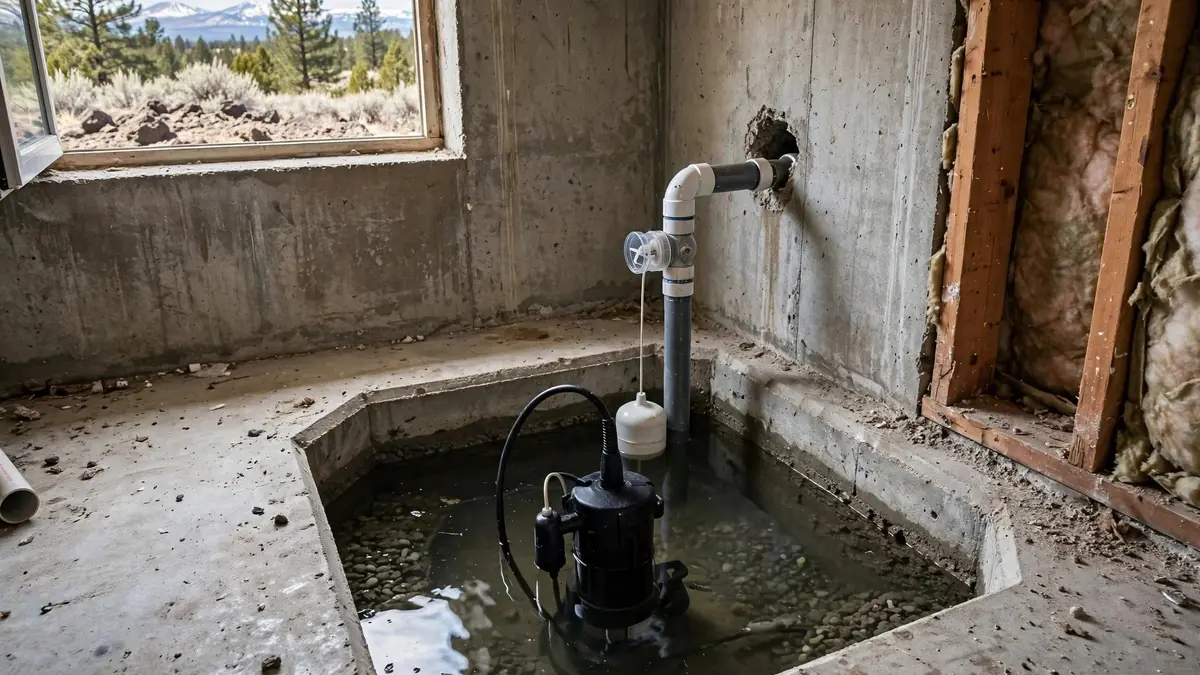
To plumb a sump pump in Saratoga Springs, UT, set a basin below the floor where water collects and place the pump in it. Run a discharge pipe up and out of the house, and add a check valve so water cannot flow back. The details that cause trouble are where the discharge ends, how the pipe is supported and whether the pump has power in a storm.
Below, each part is explained in the order water moves through it, followed by a table of what homeowners can do and what a plumber should handle.
Follow the water: basin, pump, check valve, discharge
1. The basin
A pit set into the floor, lined so it holds water without silting up. Water drains or seeps into it, and the pump sits at the bottom.
2. The pump
A submersible pump switches on when a float rises, and pushes water up through the discharge pipe. A pedestal pump sits above the pit on a motor stem.
3. The check valve
A one-way valve in the discharge pipe just above the pump. It stops the water in the pipe from running back into the basin when the pump shuts off.
4. The discharge
A pipe that carries water out through the wall and away from the foundation. The outlet end should deliver water where it will not flow back toward the house.
A small hole drilled in the discharge pipe below the check valve lets trapped air escape so the pump does not lose its prime. Many pump manuals call for it, so follow your manual.
What a homeowner can do and what needs a plumber
| Task | DIY or plumber | Reason |
|---|---|---|
| Test the float by pouring in water | DIY | Simple and safe, and it tells you whether the pump starts |
| Replacing a pump like for like | Either | Match size, discharge diameter and power rating |
| Installing a check valve | Either | Direction matters, so follow the arrow on the valve body |
| Cutting the basin into the slab | Plumber | Concrete work and pit placement affect the whole system |
| Routing a new discharge line | Plumber | Pipe size, slope and outlet location need care |
| Adding a battery backup | Plumber | The backup shares the discharge and needs wiring |
Code and permit rules are not listed here. Ask the Saratoga Springs building department before work starts.
The discharge line is where most mistakes happen
The discharge pipe moves water away from the house. If it ends too close to the foundation, the water you pumped out can soak back into the soil beside the wall and return to the basin. A longer run with a gentle downward slope helps the water drain away.
Do not tie the discharge to a drinking water line or to the irrigation system. The city says cross-connections between culinary and irrigation lines are illegal. For storm and discharge questions, ask Saratoga Springs Public Works where discharge may go, because we have not verified a city rule on that.
Power: the weak point of any pump
A sump pump needs electricity, and storms cause outages. A battery backup or a water-powered backup keeps the pump working when the power fails. Test any backup the way the manual says.
Plug the primary pump into its own outlet, and avoid sharing the circuit with a freezer or other heavy loads. If the breaker trips, the pump stops without warning.
Need a plumber right now?
The 24/7 line is open. A dispatcher will book a licensed plumber.
Where sump pumps usually fail
Check these when the pump will not keep up
- A float that sticks against the basin wall, so the pump never starts
- A check valve installed backward or stuck shut
- A basin full of silt or gravel that clogs the intake
- A discharge pipe that freezes or kinks, or ends against the foundation
- A tripped breaker or a dead battery in the backup
Sizing and the float switch
Pump size is about how much water must move and how high it must lift to reach the outlet, and the maker's performance chart shows both. A pump that is too small runs without catching up, and one that is oversized may short-cycle in a small basin.
The float switch sets when the pump turns on and off. It needs free room to rise and fall, so a basin that is too narrow can jam it. A plumber checks float travel when installing or replacing a pump.
Supports, unions and noise
A plastic discharge pipe is heavy when full of water and should be supported along the wall, not left hanging from the pump. A union fitting above the check valve lets you remove the pump later without cutting pipe.
Pumps hum and rattle if the pipe touches a joist or the basin. A bit of space and a rubber isolator quiet the system and prevent a slow leak at a joint.
Pump, waterproofing or both
A sump pump moves water out. It does not stop water from entering. If your basement keeps taking on water, the pump is the last line of defense and the cause may be drainage, grading or cracks.
Our sump pump installation page covers installs and repairs, and basement waterproofing covers keeping water out in the first place.
Serving homes around the lake and beyond
We dispatch from Saratoga Springs and also take sump calls in Lehi and Eagle Mountain. A pump that fails during a storm is a same-day call when the schedule allows, so keep our 24/7 number handy.
Saratoga Springs: irrigation season and your discharge
The City of Saratoga Springs begins charging the pressurized irrigation system the week of April 15, and it is drained the week of October 15. Spring is when more water is applied around homes, so test your pump before the system is charged and note the dates when your basin runs. A pump that cycles right after sprinklers start can point to irrigation as the water source.
The irrigation connection is a green box marked irrigation near the property line, usually with a 1-inch ball valve. Keep your sump discharge away from that box and from the foundation, and ask Saratoga Springs Public Works about where storm and sump discharge may go before you route a pipe.
Source: city utility page
Frequently asked questions
Away from the foundation and onto ground that slopes away from the house. Where it may legally go depends on local rules, so ask Saratoga Springs Public Works before connecting to any drain.
Almost always. Without it, the water in the discharge pipe falls back into the basin each time the pump stops, and the pump cycles more than it needs to. Follow your pump's manual and check that the arrow on the valve points away from the pump.
It depends on the pump, the water it handles and how often it runs. A pump that is noisy, cycles constantly or fails a float test should be checked, and a pump that sat unused for a long time may stick when it is finally needed.
Do not do this without confirming the rules. Rules differ by place, and we have not verified a Saratoga Springs rule on sending pumped water to the sanitary sewer, so ask Public Works first.
Test it before the irrigation system is charged, which the city begins the week of April 15, and again before the first storms of fall. Pour water into the basin until the float lifts and confirm the pump starts and the water leaves.
Still unsure? Call (385) 488-1892
Sources and references
Local facts on this page come from public pages like these. The city lists the 2021 International Plumbing Code (IPC) as adopted, and permit rules vary by job, so ask the Saratoga Springs building department before work starts. Page last reviewed 2026-10-15.