
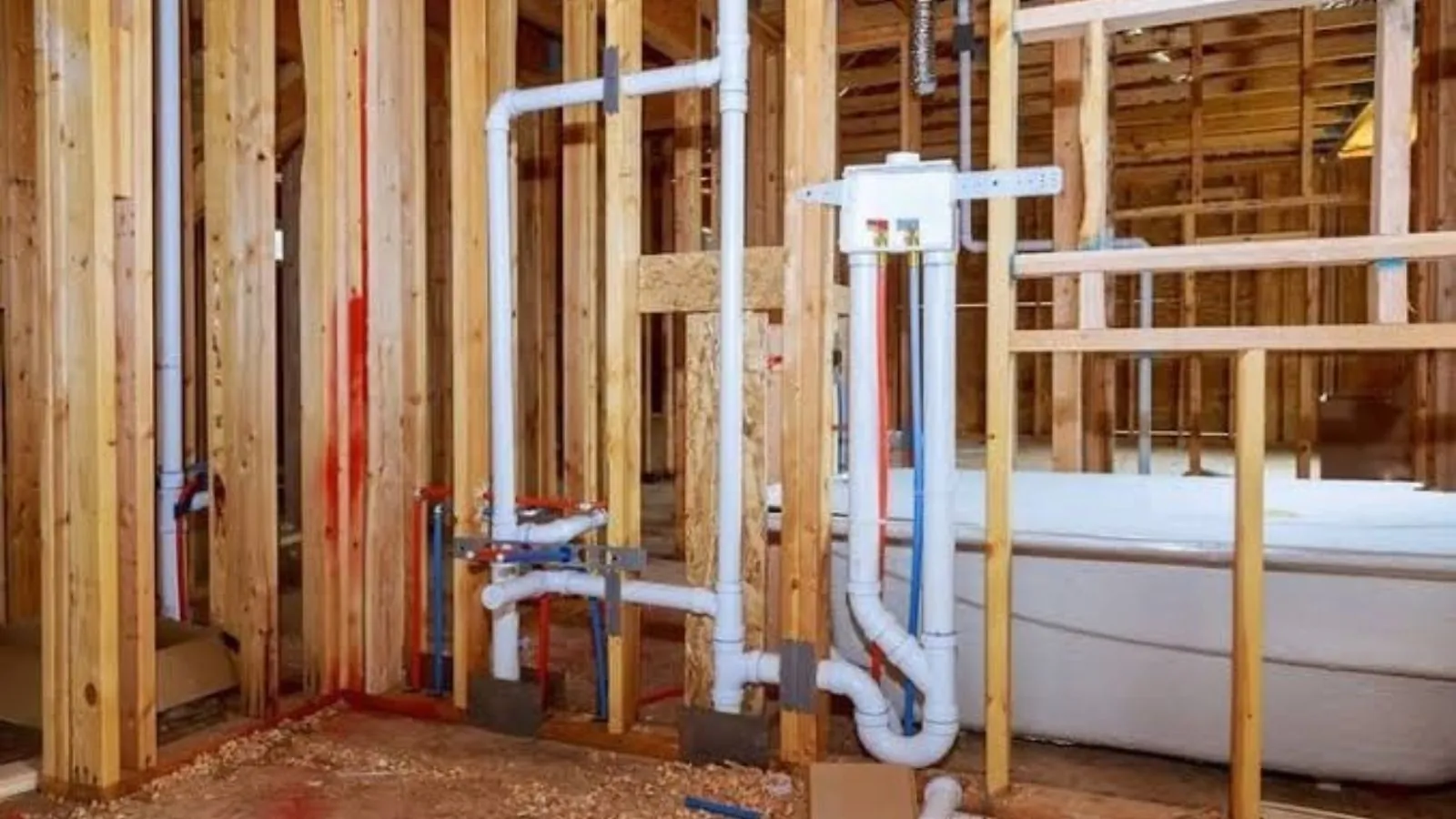
A tub shower is plumbed with one mixing valve in the wall and hot and cold supply lines feeding it. Two stub-outs carry mixed water up to the showerhead and down to the tub spout, and the drain runs through a trap into a vented waste line. Everything behind the tile is called the rough-in, and it is hard to fix once the wall is closed. A plumber should handle the parts that carry water or waste.
Two parts of the job reward patience. One is setting the valve at the right depth for the finished wall. The other is pressure testing the supply lines before any tile goes up. Skip either and you find the mistake through a stained ceiling in the room below.
The parts of a tub shower, from the wall outward
Every tub shower, from a basic builder unit to a tiled walk-in alcove, uses the same handful of parts. Knowing the names makes it easier to read a rough-in sheet or talk to a plumber.
| Part | What it does | Where it sits | Who usually handles it |
|---|---|---|---|
| Mixing valve | Blends hot and cold water and controls flow | Inside the wall, behind the handle trim | Plumber sets and tests it |
| Hot and cold supply lines | Bring water from the water heater and main to the valve | Run through the wall or floor framing | Plumber |
| Shower riser | Carries mixed water up to the showerhead arm | Vertical pipe from the valve to the head | Plumber |
| Tub spout stub-out | Carries mixed water down to the spout | Short pipe out of the wall below the valve | Plumber |
| Drain, overflow and trap | Takes waste away and holds a water seal against sewer gas | Under the tub, with the trap below the floor | Plumber |
| Vent | Lets air into the drain so it flows and the trap keeps its seal | Ties into the home's vent stack | Plumber |
| Trim kit: handle, spout, showerhead | The visible finish parts | Mounted after the wall is finished | Confident homeowner |
Roles are typical. Permit rules vary by job, so ask the Saratoga Springs building department before work starts.
Rough-in layout in the order it gets built
The sequence matters because each step hides the one before it. Work from the bottom up and from the sewer side toward the supply side.
- Read the rough-in sheetsThe valve, tub and spout each ship with a sheet that gives the depth range behind the finished wall and the pipe positions. A valve set too deep or too shallow means trim that will not seat.
- Set the drain and trapThe tub drain and overflow connect to a trap, and the trap ties into the waste line. This is done while the area under the tub is still open, so the connections can be inspected and leak tested.
- Run the supply linesHot and cold lines reach the valve body. A mounting bracket holds the valve at the correct depth so it does not rock when someone turns the handle.
- Add the stub-outsA riser goes up for the showerhead arm and a short nipple goes out for the tub spout. Both get caps or test plugs so the system can be pressurized.
- Connect the ventThe drain needs a vent path so water cannot siphon the trap dry. How that ties in depends on the stack already in your house.
- Test, then close the wallNothing gets covered until the supply and drain tests pass. This is the cheapest moment in the whole project to find a leak.
Testing before the wall closes
A leak found at the rough-in stage costs a fitting and a few minutes. The same leak found after tile is a demolition job. Run the checks below while the framing is still open.
Checks to run while the framing is open
- Cap the stub-outs and pressurize the hot and cold supply lines, then watch a gauge for any drop
- Fill the tub with a few inches of water and check the drain and overflow connections from below
- Run water down the drain and watch the trap and every joint for weeping
- Wrap a dry paper towel around each fitting, because it shows a slow seep that your eyes miss
- Open and close the valve to confirm that it moves freely and shuts off fully
Leave the pressure test running long enough to matter, not just a minute or two. A slow leak at a crimp or solder joint often needs time to show itself. Water that escapes inside a closed wall feeds mold on the back of the drywall long before a stain reaches the ceiling below.
Need a plumber right now?
The 24/7 line is open. A dispatcher will book a licensed plumber.
Why drain, trap and vent problems show up quietly
Supply leaks announce themselves with water. Drain problems are sneakier. A tub that drains slowly on its first day is often a slope or venting issue, not a clog, and no amount of plunging will fix it.
The trap is a curved section that holds a plug of water, and that plug blocks sewer gas from entering the bathroom. If the vent is missing or undersized, draining water can pull that plug out and you hear gurgling. If the drain is later blocked by hair and soap, drain cleaning clears it, but a layout flaw has to be corrected at the pipe.
What you can do and what to hand to a plumber
Reasonable to do yourself
Choosing fixtures and trim, demolition of the old surround, installing the trim kit and caulking the finished tub are common homeowner tasks.
Better left to a plumber
Moving a valve or drain, tying into existing supply and waste lines, setting the vent, soldering or crimping fittings and pressure testing the system.
Ask before you start
Whether the job needs a permit, whether an inspection must happen at rough-in and who is allowed to pull the permit. These answers vary by job.
Our plumbing installation team handles new bathroom rough-ins and valve moves. If you only need to swap a failing cartridge or replace a dripping spout, that is closer to faucet and valve repair than a rebuild.
Permits and inspection: ask before you buy materials
Permit rules vary by job, so ask the Saratoga Springs building department before work starts. Replacing a valve in place is a different job from adding a new bathroom, and the department can tell you which one yours is.
If a permit applies, any inspection would need to happen while the rough-in is open. Ask about timing before you close the wall, because once the board is up the opportunity is gone.
If a new shower leaks after the wall is closed
Signs include a damp baseboard, a stain on the ceiling below, a musty smell or a water meter that keeps moving when every fixture is off. Stop using the shower and shut the supply to that bathroom if you can.
From there, leak detection with acoustic listening or a pressure test narrows the leak to a section of wall before anyone cuts. We answer these calls in Saratoga Springs as well as Lehi and American Fork, day or night.
Saratoga Springs: building rules and licensing for a bathroom project
The city's building page lists the 2021 International Plumbing Code as adopted under Title 18, but it does not spell out permit rules for specific jobs. So for a new tub shower, ask the building department what applies before you order materials.
Utah licenses plumbers in these classes: Apprentice, Journeyman, Residential Journeyman, Master and Residential Master Plumber. The state's Verify a License lookup, run by the Division of Professional Licensing, lets you check anyone you hire before they open a wall.
Most Saratoga Springs homes were built after 2000, since the city had about 1,003 residents in 2000 and 17,781 in 2010. That means the rough-in behind your tub is likely newer than in an older town, so photograph it before it closes and keep the photos with your home records.
Source: city building page and state licensing page
Frequently asked questions
The rough-in is the plumbing hidden in the wall and floor: the valve body, supply lines, stub-outs, drain and vent. The trim kit is what you see and touch: the handle, spout and showerhead. Rough-in happens before the wall is closed and trim happens after.
Usually yes, but the supply lines must be rerouted and re-tested. Plan the move before the wall is opened, not during.
The drain needs a path for air so the trap keeps its seal and water flows freely. Whether that is a dedicated vent or a tie into an existing one depends on the layout. Ask your plumber and the building department rather than relying on a general rule.
Yes. Cap the stub-outs, pressurize the lines and watch a gauge for a drop over a meaningful stretch of time. It takes little time compared with opening a finished wall.
Use the Utah Division of Professional Licensing Verify a License lookup. Search the name or business, and confirm the license class fits the work. You can also ask any contractor to show proof of insurance.
Still unsure? Call (385) 488-1892
Sources and references
Local facts on this page come from public pages like these. The city lists the 2021 International Plumbing Code (IPC) as adopted, and permit rules vary by job, so ask the Saratoga Springs building department before work starts. Page last reviewed 2026-10-15.