
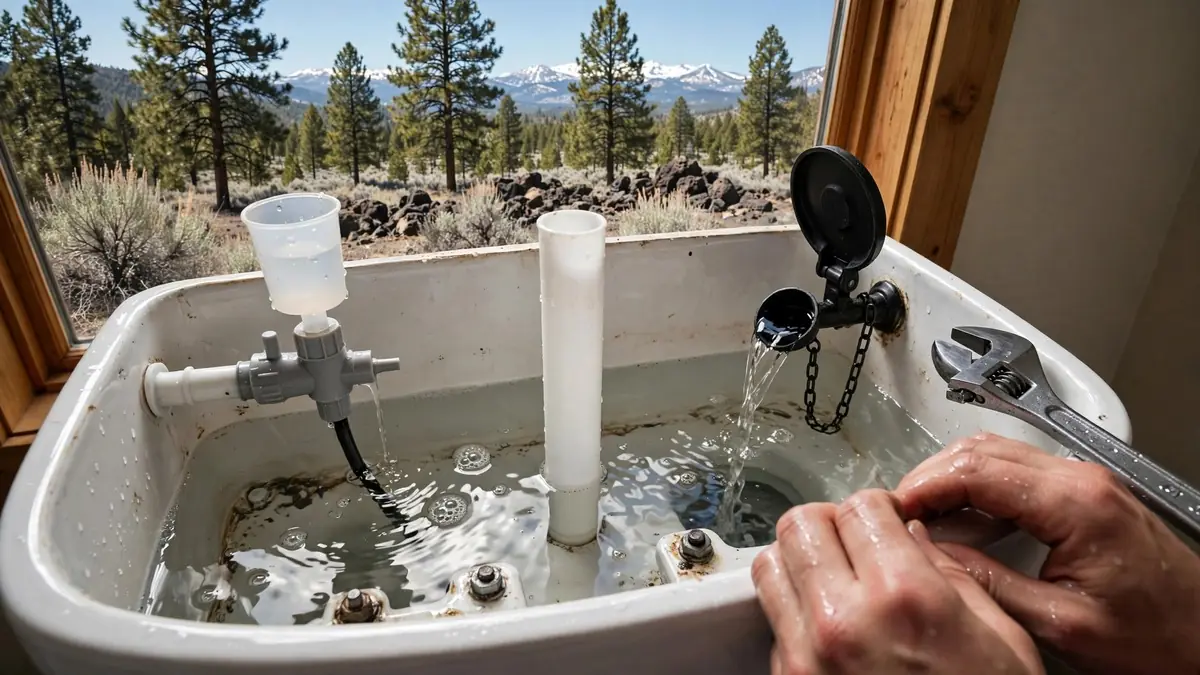
To fix a clogged toilet in Saratoga Springs, UT, stop flushing, use a flange plunger with a firm seal and steady strokes, and if that fails, feed a closet auger through the trap. Most clogs sit in the toilet's own trap and clear in minutes. If other drains gurgle or the tub fills when you flush, the clog is farther down the line.
The steps below go from least to most effort, followed by what not to do and a table for telling a toilet clog from a main line clog.
Five steps from plunger to auger
- Stop and protect the floorDo not flush again. Lift the tank lid and push the flapper closed if the bowl is near the rim. Lay towels or a tarp around the base.
- Seat a flange plungerUse the plunger with the extra rubber sleeve that fits into the drain opening, not the flat sink plunger. Make sure the cup is covered with water.
- Push gently, then pull hardPress down slowly first to push out air, then use 15 to 20 firm strokes. The pull stroke does the work of dislodging the clog.
- Try the closet augerFeed the closet auger, which has a protective sleeve, into the bowl until you feel resistance. Crank the handle to break through or hook the clog, then pull it back out.
- Test and flushPour a bucket of water into the bowl first. If it drains, flush once and confirm the water leaves.
What not to do
Mistakes that turn a clog into a repair
- Do not keep flushing to see if it will clear, because the bowl can overflow
- Do not pour drain cleaner into a full bowl. It can sit on the clog and splash during removal.
- Do not use a long wire hanger. It scratches the porcelain and can wedge inside the trap.
- Do not force a metal drain cable through a toilet. Use a closet auger made for the job.
- Do not flush wipes, even if the package says flushable
Plunger or auger: which tool for which clog
| Clog type | Tool that works | Why |
|---|---|---|
| Too much paper, slow drain | Flange plunger | Pressure and suction break paper loose in the trap |
| Hard object such as a toy | Closet auger, or removing the toilet | A plunger can push the object deeper |
| Wipes or a tangled mass | Closet auger | Wipes hold together and need to be hooked and pulled |
| Clog returns every week | Camera inspection | Something farther down, or a toilet defect, is catching waste |
| Bowl clears, then tub gurgles | Main line cable | The blockage is past the toilet branch |
If you cannot clear a toilet after two or three tries, stop and call.
Why toilets clog in the first place
A toilet trap is a curved channel built into the bowl, and it is narrower than the drain behind it. Anything that does not break down quickly, such as thick paper, wipes, cotton or a child's toy, can lodge in that curve.
Low-flow toilets send less water through each flush, so they leave more of the work to the trap. If one toilet clogs often and the rest of the house is fine, the problem is usually that toilet's trap, its flush volume or the way it is used.
Fix the cause, not only the clog
Use less paper per flush, keep wipes out of the bowl and check the flapper if the tank refills slowly. A weak flush leaves paper behind, and the next flush stacks more on top.
Need a plumber right now?
The 24/7 line is open. A dispatcher will book a licensed plumber.
How to tell a toilet clog from a main line clog
Check the other drains before you spend an hour with the plunger. If only the toilet is stopped, the clog is in the toilet. If the shower, the bathroom sink and the tub also drain slowly or gurgle when the toilet is flushed, the blockage is in a shared pipe.
A main line clog needs a drain machine from the cleanout, not a plunger. Our drain cleaning team clears branch and main lines, and our toilet repair page covers stoppages that come from a toilet defect, such as a cracked bowl or a poor seal.
Why flushable wipes cause so many calls
A wipe does not break down the way toilet paper does. It folds and snags on the rough edge of a pipe joint or the trap, then catches more wipes behind it. The clog grows over weeks, and then one flush finishes the stoppage.
The fix is simple. Put wipes in the trash, not the toilet, and tell guests and kids to do the same.
After the water goes down
Check these before you call it done
- Run a few flushes and watch that the bowl refills to the normal level and drains without a gurgle
- Wipe and disinfect the floor and the plunger, since toilet water carries bacteria
- Check around the base of the toilet for new water after you used force
- Run the sink and tub briefly to confirm they drain without a gurgle
If the water level will not go down
A bowl that stays full after plunging may have a clog deeper in the trap or a vent problem. Leave it alone for an hour, since water sometimes finds a path through a partial clog on its own.
Do not add more water to a full bowl. If you must use a toilet in the meantime, use another bathroom, and keep the closed toilet lid down so no one flushes it by habit.
When to call a plumber
Call when two plunging sessions fail, when water rises toward the rim of the bowl repeatedly, or when sewage appears in a tub or floor drain. Sewage in a floor drain means the main line is full, and the safest move is to stop using water in the house.
We answer calls in Lehi and Eagle Mountain as well as in Saratoga Springs, day or night.
Saratoga Springs: what the city says about backups
The City of Saratoga Springs Sewer Division says its Public Works crews operate the sanitary sewer collection system, and that backups inside buildings are generally caused by blockages in the building's own piping. The city will inspect the sewer piping in the street to verify. Run the fixture test first, and if a plumber's camera shows a clear house line, ask Saratoga Springs Public Works to check the street main.
Because the city treats in-building backups as a house piping question, wipes that snag inside your own pipes are your side of the line. Even a package that says flushable can catch on pipe joints, so keep them out of the toilet.
Source: city utility page
Frequently asked questions
Hot tap water, not boiling, and a squirt of dish soap can lubricate a paper clog. Boiling water can crack porcelain. Pour it from waist height, give it 15 minutes, then plunge.
Common causes are too much paper, wipes, a low-flow toilet that struggles with volume, or a partial blockage in the line. If it clogs weekly, a camera inspection finds the cause, and a plumber can also check the flush volume and the way the toilet is set on the flange.
We advise against it. It can sit on top of a full blockage, damage some pipes and splash on whoever opens the line next.
When sewage is coming up through another drain, when water is overflowing onto the floor and will not stop, or when the whole house drains slowly. Stop using water and call the 24/7 line.
The city's sewer page says backups inside buildings are generally caused by blockages in the building's own piping, and Public Works will inspect the sewer in the street to verify. Call a plumber first for the house piping.
Still unsure? Call (385) 488-1892
Sources and references
Local facts on this page come from public pages like these. The city lists the 2021 International Plumbing Code (IPC) as adopted, and permit rules vary by job, so ask the Saratoga Springs building department before work starts. Page last reviewed 2026-10-15.