
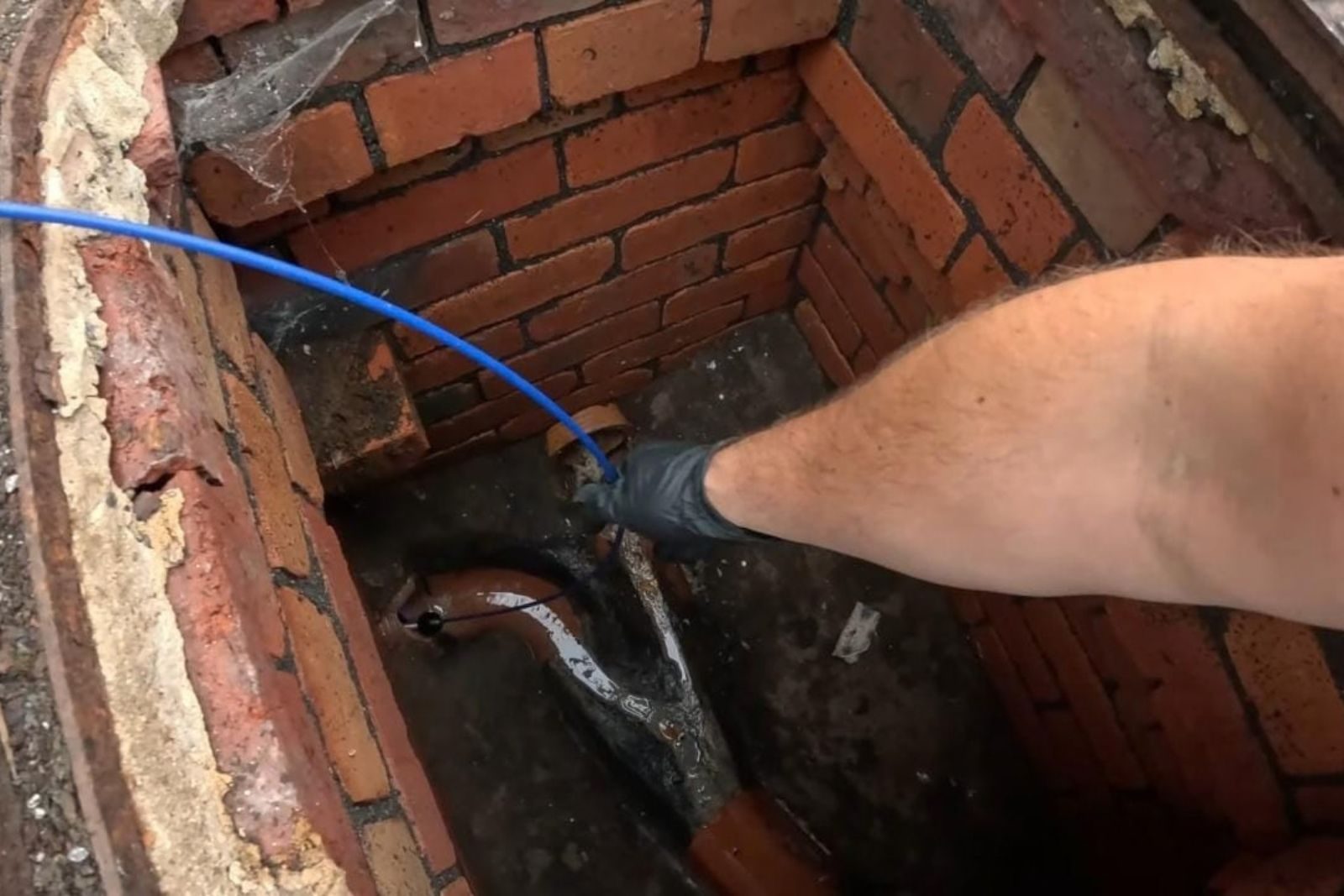
Sand can clog a drain, but usually only when a lot goes down at once or settles where water moves slowly. A pinch from a swimsuit rinses through a shower trap. A scoop from a beach bag or a cooler settles in the trap and the first flat stretch of pipe. Sand is heavy and does not dissolve, so it builds a layer that traps hair and soap. Lake days make it worse.
This guide covers where sand goes, a rinsing routine for lake days and what to do when it has already built up.
Where sand ends up in a house
| Place | What happens to sand there | What helps |
|---|---|---|
| Shower and tub drain | Settles in the trap and tub tee, mixes with hair | Strainer, rinse the feet outdoors first |
| Laundry sink and washer drain | Gritty swimsuits and towels shed sand into the line | Shake out gear outside before washing |
| Garage or utility floor drain | Settles in the trap and the lowest bend | A mesh strainer or a bucket rinse |
| Kitchen sink | Sandy dishes and coolers drop grit into the trap | Rinse outside, keep a basin strainer |
| Outdoor shower drain | Collects sand and leaves in the first fittings | Gravel bed or a screen, clean it often |
| Water heater tank | Sediment from the supply collects in the bottom | Periodic flush and sediment check |
Most of these are small habits. A drain that already runs slow needs a cable, not a new habit.
A rinse routine for lake days
- Shake and brushKnock the sand off towels, shoes and bags on the lawn or driveway before they come in.
- Rinse outdoorsHose off feet, strollers and gear on a bed of gravel or grass rather than into an indoor drain.
- Use the strainersKeep a fine mesh strainer in the shower and in the utility sink and empty it into the trash, not down the drain.
- Flush with waterIf a little sand does go down, run plenty of water for a minute so it clears the trap instead of settling.
Outdoor showers and floor drains
An outdoor shower is convenient after a day at the lake, and it is also a trap for sand. Its drain is often small and shallow. Put a gravel bed or a removable screen over it, and scoop sediment out by hand every season.
Floor drains in garages and laundry rooms catch what drips off boats and coolers. They have a trap that holds water, and sand piles up there. Pull the grate, vacuum or scoop out the grit, and pour in water to refill the trap.
Sediment in the water heater
Water heaters collect sediment at the bottom of the tank over time. It is mostly minerals from the supply, not lake sand, but it behaves the same way. It forms a layer, makes the burner or element work harder and can cause popping sounds when it heats.
A yearly flush through the drain valve helps. If sediment is heavy or the valve is clogged, have a plumber check the tank. Lake-day habits do not affect the heater, so keep this task separate from the rinse routine.
Need a plumber right now?
The 24/7 line is open. A dispatcher will book a licensed plumber.
Why sand is harder on drains than most debris
Hair, paper and soap move with the water, and a good flush carries them along. Sand sinks. In a horizontal pipe it drops to the bottom the moment the flow slows, and the next load stacks on top of it.
A drain with a low spot or a slight sag collects sand first. That is why a floor drain or a garage line, which sees little flow, can fill with grit while the shower drain a few feet away runs fine.
Laundry day after the lake
Swimsuits, towels and kids' clothes carry more sand than you can see. A washer pumps all of it into the standpipe in one burst. Shake each item hard outside, and rinse swimwear with a hose before it goes in the machine.
If the washer drain gurgles or backs up into the laundry sink after a lake weekend, sand is a reasonable first guess. Stop using the washer and have the line checked, since a full standpipe can overflow onto the floor.
Signs sand has already built up
What to look for
- A tub or shower that drains slowly even after you remove hair
- A gurgle from the tub when the washer drains
- A gritty feel when you scrape the inside of the trap
- A floor drain that smells or holds water longer than usual
- Sand showing up in the bottom of the strainer every time you use it
What a plumber does about sand
A cable machine can break up a sand and hair plug and pull it out. For a larger deposit in a branch line, hydro-jetting flushes the sand out of the pipe. Our drain cleaning team handles tub, laundry and floor drain clogs.
If sand is reaching the main, or several drains back up at once, sewer line cleaning clears the longer run to the street. We can run a camera after to check for a low spot where sand keeps collecting.
Serving lake-side homes and nearby towns
We take drain calls any hour, in Saratoga Springs and nearby, including Lehi and Eagle Mountain. Describe which drains are slow and what the family has been doing, because that narrows the cause.
Saratoga Springs: Utah Lake days and what comes home with you
Saratoga Springs sits on the northwestern shore of Utah Lake, and the Saratoga Springs Marina and Pelican Point on the lake's west side are two named places people head for a day on the water. Whatever grit comes home on towels and boat gear, give it a rinse spot on the lawn or driveway before it reaches an indoor drain.
Set up that spot once. A hose bib, a gravel bed and a bucket handle most of it, and the result is a lot fewer service calls for sand.
Source: Wikipedia landmark entries for Saratoga Springs
Frequently asked questions
Usually not. A pinch rinses through when water flows well. Problems start when a lot arrives at once or the drain already runs slowly.
Sand can dull the grinding parts and wear the seals over time. Rinse sandy dishes outside and scrape grit into the trash before using the sink.
A little is fine with a strainer in place. Larger amounts should go outside, onto gravel or grass.
Sediment at the bottom traps water, which boils under it and pops. A flush may reduce it. If it continues, have the heater checked.
Shake out towels and gear on the lawn first, then rinse feet and equipment outside on gravel or grass. Keep indoor drains for what is left, and use a mesh strainer in the shower.
Still unsure? Call (385) 488-1892
Sources and references
Local facts on this page come from public pages like these. The city lists the 2021 International Plumbing Code (IPC) as adopted, and permit rules vary by job, so ask the Saratoga Springs building department before work starts. Page last reviewed 2026-10-15.