
Dish soap alone rarely clogs a drain, because soap is made to wash away with water. The trouble starts when soap mixes with cooking grease, food scraps or minerals in the water. Together they form a sticky paste that coats the pipe wall and catches more debris with each use. It builds slowly, so you may not notice until the sink takes minutes to drain. Here is how to tell suds from a clog.
This page explains what actually builds up in a kitchen line, how to tell suds from a clog, and what you can safely try before calling a plumber.
What actually builds up in a kitchen drain
| Ingredient | On its own | Combined with soap |
|---|---|---|
| Dish soap | Rinses away with water | Binds with grease and minerals into a sticky film |
| Cooking grease and oil | Liquid when hot, solid when cool | Soap can carry it down the line, where it cools and sticks to the pipe |
| Food particles | Small amounts wash through | Stick to the film and narrow the pipe |
| Hard-water minerals | Leave scale on pipe walls | React with soap to form scum |
| Coffee grounds and starches | Settle in low spots | Form a dense plug with the film |
Most kitchen clogs are mixtures, not one material.
Soap, grease and the way a kitchen clog forms
Hot soapy water makes grease look gone. It has only been broken into smaller droplets and carried away. When it reaches a cooler stretch of pipe it can solidify again, farther from the sink and out of reach of your plunger.
That is why a kitchen line can clog even when you only ever use a small squirt of soap. The soap is not the clog. It helps move grease to a place where it does harm.
Suds in the dishwasher are a different issue
If foam pours out the door or the air gap, the cause is almost always the wrong detergent. Hand dish soap makes far more suds than dishwasher detergent, and the machine cannot drain the foam fast enough. That is overflow, not a drain clog, and it clears once the soap is rinsed out of the tub.
To fix it, stop the cycle, scoop out the foam, run a rinse with no soap, and use only dishwasher detergent going forward. If the dishwasher still backs up into the sink, the drain line or disposal is likely partly blocked.
Soap scum and hard water
Soap reacts with calcium and magnesium in hard water and forms a gray, waxy scum. It coats sinks, tubs and the inside of drains. The harder the water, the more scum you can expect per squirt of soap.
Hardness varies by water source and your utility can tell you what yours is. Hardness classes are generally accepted as soft at 0 to 60 mg/L, moderately hard at 61 to 120, hard at 121 to 180 and very hard above 180. You can also test your tap with a simple kit.
Need a plumber right now?
The 24/7 line is open. A dispatcher will book a licensed plumber.
Four myths about soap and drains
Myth: soap dissolves grease for good
It breaks grease into droplets. Those droplets can rejoin and harden farther down the pipe.
Myth: boiling water is the safe cure
Very hot water can soften some plastic fittings and traps. Hot tap water is enough for a film.
Myth: baking soda and vinegar clear clogs
The fizz can freshen a drain, but it rarely moves a real blockage.
Myth: more soap means a cleaner pipe
Extra soap adds more film to the pipe wall and more suds in the machine.
Bathroom sinks and showers follow the same rule
Hand soap, shampoo and body wash behave like dish soap. The soap film is mild, but it catches hair, and hair plus film is the classic bathroom clog. If a tub or sink drains slowly, look for hair at the stopper first.
A drain strainer costs little and stops most of it. When the line is already slow, a small hand tool or a cable clears the hair and film, and a plumber can do that in one visit.
What the garbage disposal changes
A disposal grinds scraps into pieces small enough to wash away, but it does not remove grease or starch. Those rinse into the line with soap and add to the film. Rice, pasta and potato peels swell into a paste, and fibrous scraps wrap around each other.
If your disposal hums, jams or drains slowly, the problem may be in the disposal chamber, the trap or the branch line behind it. Our garbage disposal repair page covers jams, leaks and replacements.
What to try before you call
- Flush with hot waterRun the hot tap for a minute or two with a little dish soap. Use hot tap water, not boiling, since boiling water can soften some plastic pipes.
- Plunge the sinkSeal the second basin with a wet cloth, cover the drain with water and plunge with firm strokes.
- Clean the trapPut a bucket under the trap, unscrew the nuts, empty the trap and clear the arm. Reassemble with the washers seated.
- Stop pouring greaseWipe pans with a paper towel, put cooled fat in the trash and use a strainer in the sink.
When it is time for a plumber
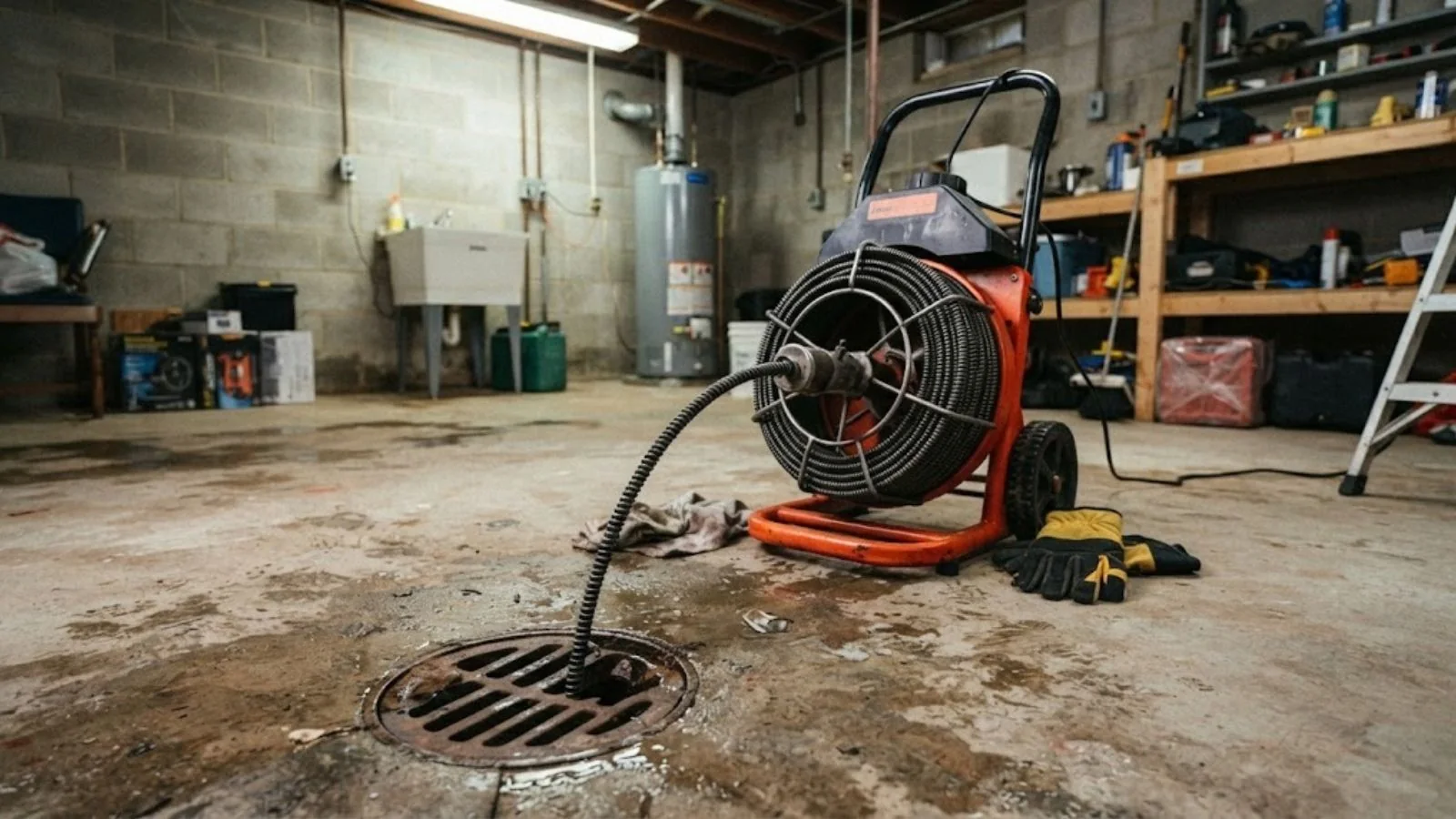
Call if the sink drains slowly again within days, if several fixtures back up, or if you hear gurgling. A cable can open the branch and a camera shows what is coating the pipe. When grease is the cause, drain cleaning with hydro-jetting scours the pipe wall, which a cable cannot do.
We answer drain calls day and night in Saratoga Springs, and we also serve Eagle Mountain and American Fork.
Saratoga Springs: city sewer facts and the hardness question
The city's Sewer Division page says backups inside buildings are generally caused by blockages in the building's own piping, and that the city will inspect the sewer piping in the street to verify. So a kitchen line packed with grease and soap is your side of the problem, and a plumber is usually the right first call.
The city's 2024 Annual Drinking Water Quality Report lists total dissolved solids of 144 to 672 ppm but no hardness value. If you are unsure how hard your water is, ask your utility and test your tap, because that tells you how much scum your soap may form.
Source: city sewer page and city water quality report (2024)
Frequently asked questions
A little soap with hot water can loosen a greasy film, but it will not clear a solid clog. Pouring a lot of soap can add to the problem if you do not flush it. Use a plunger or cable for a true blockage.
It emulsifies grease into small droplets so they wash away. Farther down the line, where the water cools, that grease can solidify again. Soap helps move grease but does not remove it from the system.
Hand dish soap makes much more foam than dishwasher detergent. The machine cannot drain the foam quickly, so it spills out. Use only dishwasher detergent and run a rinse cycle to clear the soap.
We advise against them in a drain that is fully blocked. The liquid sits on top of the clog and can damage some pipes. Mechanical clearing is safer and usually works better.
The city's 2024 water quality report lists total dissolved solids of 144 to 672 ppm but no hardness value. To know yours, ask your utility and test your tap with a kit.
Still unsure? Call (385) 488-1892
Sources and references
Local facts on this page come from public pages like these. The city lists the 2021 International Plumbing Code (IPC) as adopted, and permit rules vary by job, so ask the Saratoga Springs building department before work starts. Page last reviewed 2026-10-15.